
How to Set Up a Nitro Engine for the First Time

How to Set Up a Nitro Engine for the First Time

Table of Contents

  1. Introduction
    – Overview of nitro engines
    – What to expect as a beginner
  2. Getting Started and Setting Up the Basics
    – Tools and supplies you need
    – Priming the engine and glow plug check
    – Pre-start inspection tips
  3. Starting the Engine and Doing the Break-In Right
    – First-time starting guide
    – How to properly break in the engine
    – Mistakes to avoid during break-in
  4. Tuning Tips and Maintenance for Long-Term Performance
    – Fine-tuning for speed and reliability
    – Post-run care and maintenance routine
    – Troubleshooting common issues
  5. Conclusion
    – Building confidence with each run
    – Encouragement for continued learning

How to Set Up a Nitro Engine for the First Time

Setting up a nitro engine for the really first time may be both exhilarating and a little daunting, specifically if you’re new to the sport. But don’t worry—it’s easy than it appears once you get hands-on.

First things first, gather all that you need: nitro fuel (typically 20%), a glow igniter, the fuel bottle, a flat-headed screwdriver, after-run oil, and your RC model alongside a fully charged transmitter and recipient. Make sure your air filter is clean and installed appropriately because a dirty engine won’t last long. Connect the gasoline lines firmly and double-check for any leaks. Then set the engine by filling the tank and pulling petrol into the carburetor—this helps about the first ignition.

Test your light plug with the igniter; it should glow a solid orange. Once everything appears ready, you’re good to go to the beginning step. Be patient here—your engine might not fire up right immediately, and that’s entirely okay.How to Set Up a Nitro Engine for the First Time

Starting the Engine and Doing the Break-In Right
How to Set Up a Nitro Engine for the First Time

Once you’re set up, turn on your transmitter first, then your receiver. Attach the glow igniter and crank the engine using either the pull start or starter box. It might take a few tries, especially if this is the engine’s first run. After it starts, let it idle for a few minutes. For your very first tank, it’s best to let the engine run at idle with the car raised so the wheels don’t spin on the ground. This break-in step is really important—it helps all the moving parts settle in properly.

You want to keep the engine running rich during this time, meaning you’ll see some smoke coming from the exhaust. That’s a good thing! Run a few full tanks of fuel this way—start with idle, then gradually increase throttle as you go, but never go full throttle until you’ve completed at least 4-5 tanks. Let the engine cool down completely between each tank to avoid overheating. Don’t rush this step—it makes a big difference in how long your engine lasts and how well it performs down the line.How to Set Up a Nitro Engine for the First Time

Tuning Tips and Maintenance for Long-Term Performance
How to Set Up a Nitro Engine for the First Time


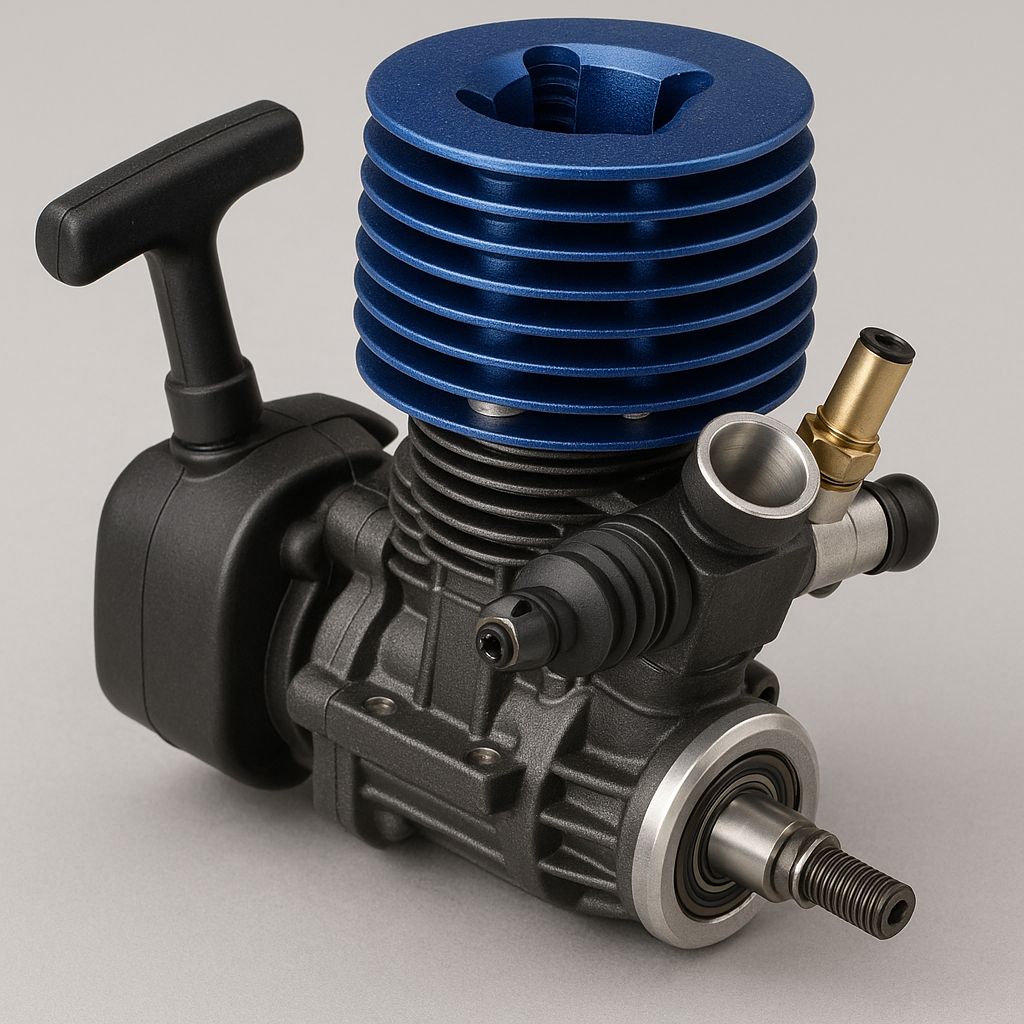
After the break-in time is done, you may start adjusting the engine for optimal performance. The idea here is to make tiny changes so the engine. It runs powerful without overheating. If your engine stuttering when growing faster, try modifying known as low-speed needles slightly. If it’s slow at full power, lean out the high-speed needle is used just a bit—but always check for smoke. You want a regulate between power and lubricant. Keep an eye on engine

temperature, and use a temp gun if you have one (target for roughly 200–270°F). After each run, don’t forget upkeep: maintaining empty the fuel tank, add a few drops of after-run oil, and clean an air filter. This procedure keeps your engine in great form and set for the next session. It’s also good to check the glow plug every now and then—they do wear out. Setting up and tweaking a nitro engine can seem like a lot at first, but once you’ve done it a few times, it becomes second nature. Take your period of time, enjoy the picking up process, and have fun with yourself nitro-powered machine!How to Set Up a Nitro Engine for the First Time

The Rise of the J-20 Chinas Stealth Powerhouse

The Rise of the J-20 Chinas Stealth Powerhouse

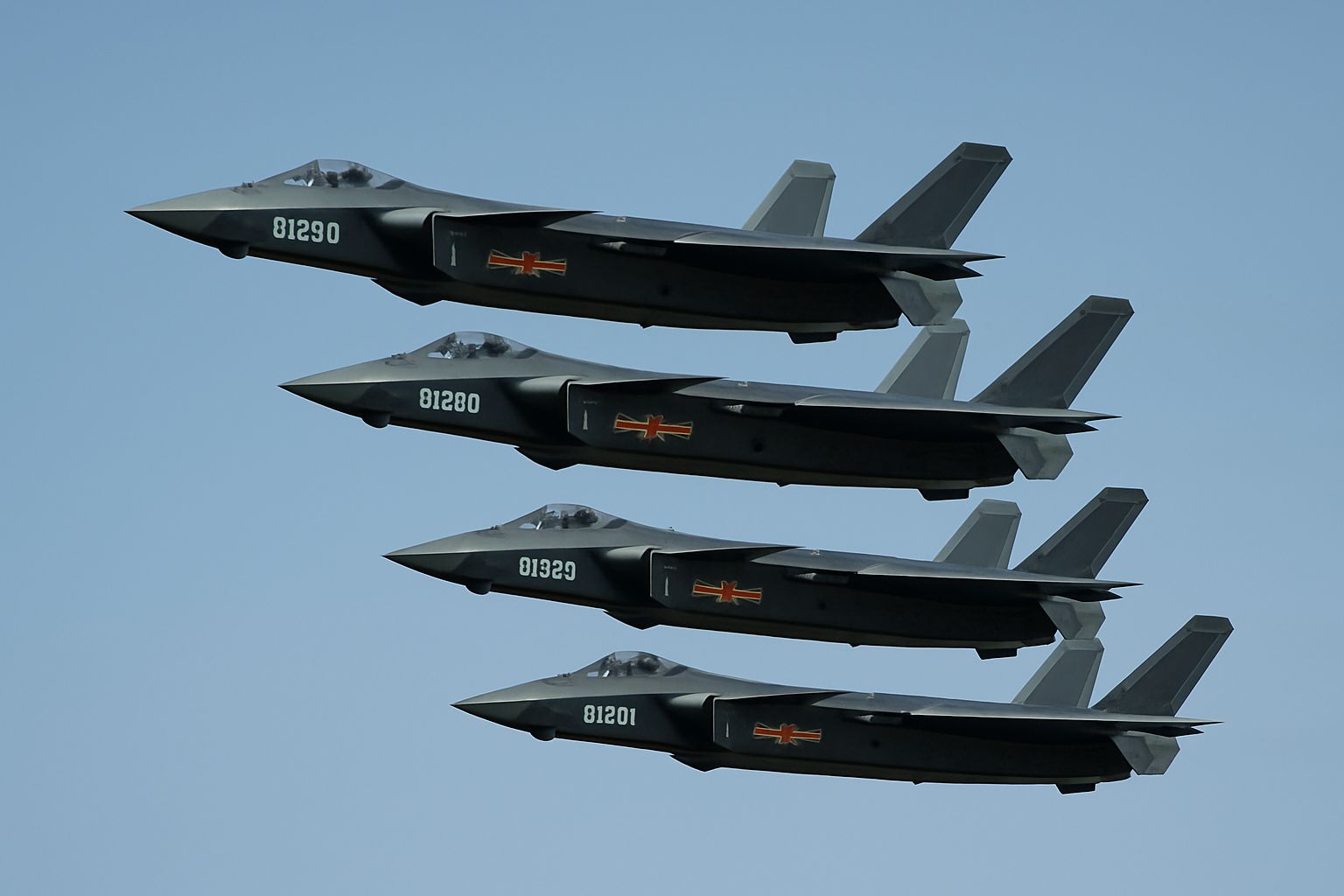
The Chengdu J-20, sometimes termed the “Mighty Dragon,” symbolizes China’s brave entry into the field of fifth-generation fighter planes. Designed with stealth, agility, and contemporary conflict capabilities in mind, the J-20 is China’s address to America’s F-22 Raptor and F-35 the lightning II. But this aircraft is more than simply an armed forces asset—it’s a symbol of China’s resolve to compete on the world arena, both technologically and geopolitically.The Rise of the J-20 Chinas Stealth Powerhouse

Origins: From Concept to Sky

The journey of the J-20 began in the early 2000s when China realized that its aging fleet of fourth-generation fighters wouldn’t be enough to keep pace with other global air powers. The U.S. had already unveiled its stealth fighters, and Russia was working on advanced designs too. China needed something not only comparable—but uniquely Chinese.The Rise of the J-20 Chinas Stealth Powerhouse

In 2011, the world got its first real glimpse of the J-20 when it made a surprise appearance at a test flight in Chengdu. At the time, many analysts were stunned—not just by the aircraft itself, but by how quickly China had developed a stealth fighter from scratch.The Rise of the J-20 Chinas Stealth Powerhouse

The jet’s development was spearheaded by the Chengdu Aerospace Corporation, and it drew from years of experience, some Western design influence, and heavy investment in research and development. By 2017, the J-20 officially entered service with the People’s Liberation Army Air Force (PLAAF).

Design and Stealth Features

From a distance, the J-20 looks like a sleek, futuristic machine. Its angular surfaces, low radar cross-section, and twin-engine configuration are all designed for stealth. The aircraft was built with one major idea in mind: survivability in modern, high-tech warfare.

The Rise of the J-20 Chinas Stealth Powerhouse

The J-20 features canards (small forward wings), which are rarely seen on stealth jets but may improve maneuverability. Its internal weapon bays help it remain radar-invisible while carrying missiles. The aircraft also uses radar-absorbent materials and a design that limits heat and noise signatures.

Unlike the American F-22, the J-20 was initially powered by Russian AL-31 engines, but China is gradually shifting to its indigenous WS-10C and WS-15 engines—powerplants that promise to bring the jet closer to true fifth-gen performance standards.

Inside the cockpit, pilots have access to modern avionics, large multifunction displays, and helmet-mounted sights—features that support both air-to-air and air-to-ground missions.

Role and Mission Capabilities

The J-20 isn’t simply a stealthy the interceptor; it’s a multipurpose tool developed for numerous missions in contemporary warfare. While its primary function is to control the skies, it also has the capacity to strike ground targets and execute reconnaissance flights as needed.

What distinguishes the J-20 different is its concentration on beyond-visual-range (BVR) warfare. It’s armed with distant PL-15 missiles that can engage opposing aircraft from distances of over 200 km, restoring it the edge before fighting even begin. This underscores China’s wider trend toward long-range, networked warfare.

The jet is thought to feature advanced radar and digital warfare technologies that make it tough for foes to identify or target. It may also act in concert with drones and early warning planes, providing a network of awareness and attack capacity that increases its battlefield usefulness.

With its stealth and long-range missiles, the J-20 is well suited for missions in contentious locations like the South China Sea or near Taiwan—areas where China seeks air control without initiating outright war.

Comparison with Global Rivals

So, how does the J-20 examine to its counterparts like a F-22 or the Russian Su-57? It is dependent on who you ask.

In sheer fighting performance, the F-22 Raptor is typically regarded better, given to its thrust-vectoring motors and enhanced stealth. The F-35, meanwhile, has unrivaled network and sensor fusion capacity, which make it a flying data center as much as a fighter.

But the J-20 acts a different game. It’s not made for up-close combat—it’s designed to see first, shoot first, and disappear. That alone makes it a dangerous threat in locations where long-range standoff tactics dominate.

Moreover, the J-20 is supported by China’s burgeoning military-industrial complex, meaning it can be manufactured at scale and developed incrementally. Its development hasn’t ceased. Future modifications may include two-seat arrangements for AI control, improved sensors, or drone swarm coordination.

China is also working on integrating the J-20 into a wider battle ecosystem—linking it with unmanned aircraft, satellites, and missile weapons to establish a holistic warfighting network.

Symbol of National Pride and Strategy

For the People’s Republic the J-20 is far more compared with an aircraft—it’s a representation of national triumph. It underlines China’s aim to not just protect its borders but to project dominance across the The Asia-Pacific area and beyond. As the government continues to extend its influence, bringing a fifth-generation fighter lets China speak the power source global language of strength.

The aircraft also plays a crucial position in what India calls “informatized warfare”—a sort of military strategy that depends on real-time data, dialog networks, and collaborated action. With the J-20 as a the focal point, China is developing a force that shall compete with the finest in the world.

Yet the narrative of the J-20 is still developing. As additional aircraft enter service and other variations are launched, the actual effect of this stealth fighter will become obvious. For now, it remains as a fascinating illustration of how swiftly a nation may develop in technical competence provided it invests the resources and willpower.

Conclusion

The J-20 is a big leap toward for China’s air compelled and underlines its larger strategic aspirations. Whether considered as a menace or a wonder of engineering, there’s no disputing the significance this aircraft plays in changing the regulate of air power in the 21st era. It’s quick, it’s stealthy, and most all, it’s a statement to the world: China is down in the sky

The Mysterious J-50 China Future Fighter Jet

As global defense analysts keep their eyes on China’s growing military modernization, rumors and scattered reports about a new, next-generation fighter jet—possibly named the J-50—have begun to stir conversations in military and aviation circles. While the Chinese government has not officially confirmed the development of a jet bearing that designation, several signs suggest that something significant may be taking shape behind closed hangars.

With hints of major design revisions, cutting-edge electronics, and possibly sixth-generation characteristics, the so-called J-50 might become a significant element of China’s for a long time air force plans.

1. What Is the J-50? Speculation and Shadowy Origins

The name “J-50” has appeared in unofficial defense blogs, speculative Chinese media posts, and forums over the past couple of years. It’s unclear whether it represents an entirely new aircraft, an evolution of the current J-20, or a placeholder for a more advanced program. Nevertheless, military watchers believe this could be the Chinese response to the U.S.’s Next Generation Air Dominance (NGAD) program and similar efforts underway in Europe.

Some believe the J-50 may be under development by Chengdu Aerospace Corporation, the same company behind the J-20 “Mighty Dragon.” If true, it would make sense—their experience in stealth and modern airframe design gives them the pedigree needed for such a project.

While hard data is scarce, satellite imagery of Chinese airfields and obscure patent filings have only added fuel to the fire. Several concept drawings shown at airshows and leaked through social media hint at a sleek, tailless delta-wing design, optimized for stealth and speed.

The Mysterious J-50 China Future Fighter Jet

2. Design Features: What Could the J-50 Look Like?

In the event the J-50 exists, it is likely developed with stealth while agility at the forefront. Experts say it may seem like a blended-wing-body aircraft with not a vertical stabilizers, comparable to notions explored in Western sixth-gen designs. This tailless layout decreases radar signature and enhances aerodynamic efficiency.
The plane is also speculated to have next-gen propulsion systems, perhaps employing variable-cycle engines that allow for supersonic cruising speeds despite afterburners—a capability mainly a few jets in the world now possess.
Advanced components such as radar-absorbing composite materials, a plasma stealth innovations, and heat-shielding coatings could be combined to minimize infrared and radar detectability. In short, the J-50 might represent a considerable jump from existing fifth-generation capabilities.

3. Brains Over Brawn: The Role of AI and Drone Integration

One of the defining features of future fighter jets will be their ability to process enormous amounts of data in real-time. In this domain, the J-50 is expected to shine—not just as a combat platform, but as a networked command node in a larger combat ecosystem.

If reports are accurate, the aircraft will come equipped with onboard artificial intelligence capable of managing surveillance data, detecting enemy threats, and even making split-second combat decisions to assist the pilot. The AI could also control unmanned wingmen, forming what’s known as a loyal wingman system, where the pilot commands a group of drones to act as decoys, scouts, or strike assets.

The Mysterious J-50 China Future Fighter Jet

Such capabilities would give the J-50 an asymmetric advantage in contested environments like the Taiwan Strait or the South China Sea, where electronic warfare and high-threat zones demand quick reaction and layered defense strategies.

4. Strategic Role: Why the J-50 Matters to China’s Military Doctrine

The J-50 would be considered more than solely a next-gen fighter—it might become a the symbol of strategic discouragement. As the global power rivalry increases, notably with the United States and its allies growing their existence in the Indo-Pacific, China aspires to achieve air supremacy across its sphere of influence.

A aircraft like the J-50 would give the The population’s Liberation Army Air Force (PLAAF) a significant edge. Not only would it operate in air superiority duties, but it could also be converted for deep strike missions, technological warfare, and perhaps airline operations—especially if The nation’s future aircraft carriers shift to magnetic catapults, like the people on the U.S. Navy’s Gerald’s name R. Ford-class.

By deploying a jet with such mobility, China could transmit a powerful message: it aspires to lead not merely on oceans and land, but also in the high the nights of the 21st century.

The Mysterious J-50 China Future Fighter Jet

5. Challenges and The Road Ahead

Developing a sixth-generation aircraft—or even a sophisticated fifth-plus-gen jet like the J-50—is no easy task. China has significant technological challenges, notably in areas like engine manufacture, AI dependability, and sophisticated avionics integration.

Historically, Chinese fighters had relied on foreign engines or battled with homegrown options that lacked longevity or power. If the J-50 is to succeed, bridging this gap is critical.

Moreover, putting AI into one live fight platform raises problems regarding cybersecurity, machine values, and pilot-AI cooperation. China has showed tremendous investment in these areas, but operationalizing such innovation at scale remains a key problem.

Still, if current events is anything to go by—from the quick development of the J-20 to the introduction of stealth the drones like the GJ-11 Sharp Sword—China has the a momentum, resources, and strategic intent to make the J-50 a reality in the coming decade.

Conclusion

Even though the Chinese J-50 is still officially unconfirmed, the clues are too tempting to ignore. In the realm of rapid, high-tech military innovation, stillness frequently implies development is happening behind the scenes. If or when the J-50 ultimately takes to the skies, it might represent a new era not simply for Chinese air travel, but for the worldwide balance of air power.

The jet may still remain an unknown, but this much is certain—China’s aim to rule the sky is very, very real.

Agricultural Drones Revolutionizing Modern Farming

Agricultural Drones Revolutionizing Modern Farming

Table of Contents

  1. What Are Agricultural Drones?
  2. Key Uses of Agricultural Drones
    • 2.1 Field Surveillance and Monitoring
    • 2.2 Crop Health Assessment
    • 2.3 Soil and Field Analysis
    • 2.4 Aerial Spraying
    • 2.5 Crop Planting
  3. Benefits of Using Agricultural Drones
  4. Challenges and Limitations
  5. The Future of Agricultural Drones
  6. Conclusion
Agricultural Drones Revolutionizing Modern Farming

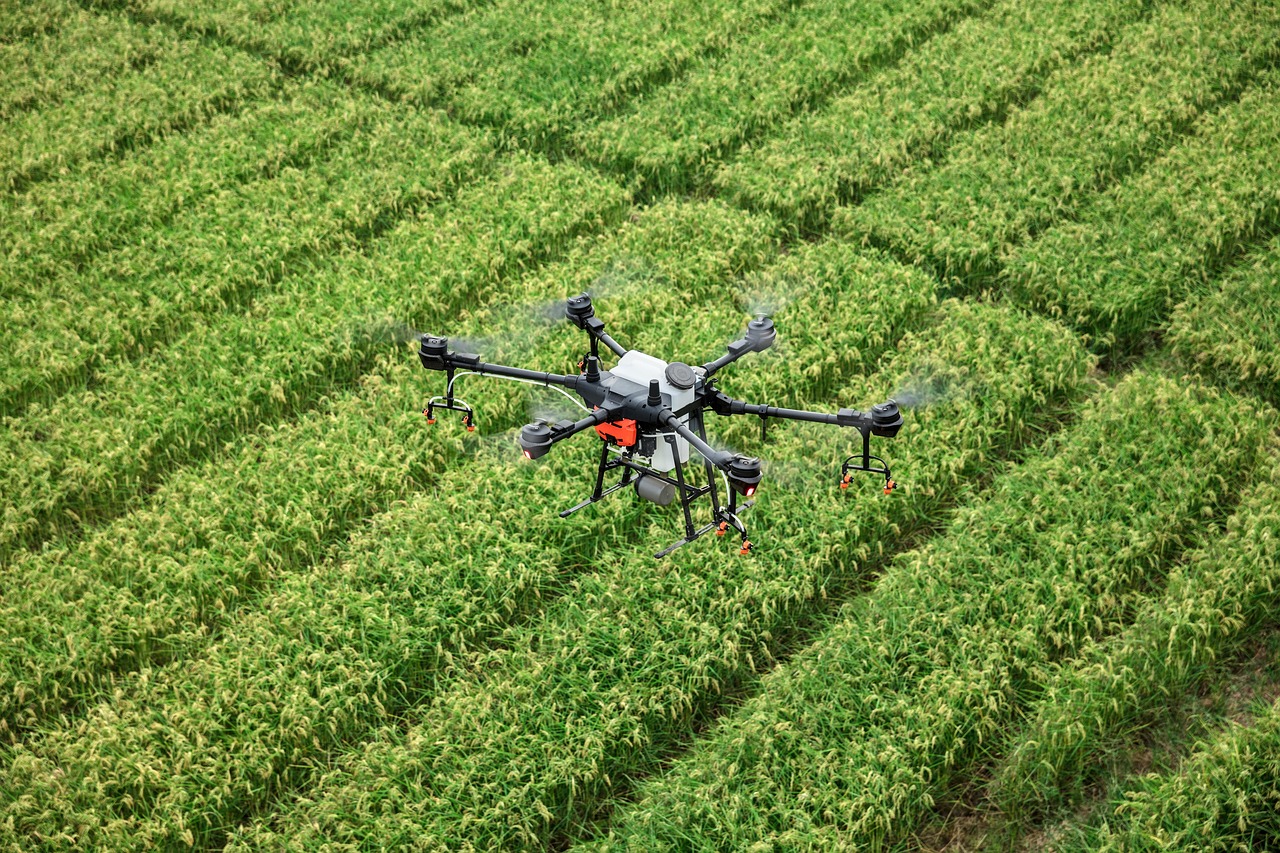
In the year recent years, growing crops has undergone a technological transformation, with drones taking a significant part in transforming agricultural processes. Agricultural drones, also known as agri aerial vehicles, are unmanned the air vehicles (UAVs) that serve in monitoring, analyzing, and managing agricultural operations. Their rising popularity highlights how innovation is helping farmers raise efficiency, decrease labor, and improve agricultural output.

What Are Agricultural Drones?

Agricultural drones are fitted with cameras, sensors, GPS, and occasionally sprayers, enabling them to do numerous jobs such as:

Crop monitoring

Soil analysis

Planting

Irrigation management

Pesticide and fertilizer spraying

Agricultural Drones Revolutionizing Modern Farming

These unmanned aerial vehicles can cover enormous regions fast, acquire precise airborne data, and give landowners with knowledge that would be challenging or tedious to obtain manually.

Key Uses of Agricultural Drones

Field Surveillance and Monitoring

Drones may take high-quality captures of crops, helping farmers to discover concerns like insect infestations, nutritional deficits, and irrigation difficulties early. This allows quicker and more focused actions

Crop Health Assessment

furnished with multicolored sensors, drones can look into the wellness of crops by monitoring metrics like green pigment levels and plant vitality. This data helps agriculturalists recognize the growth designs and potential profits of their crops

Soil and Field Analysis

preceding growing, drones can survey and assess soil situations, helping to identify ideal growing patterns and irrigation schedules. Some drones can even offer 3D maps to aid with precision agricultural approaches

Aerial Spraying

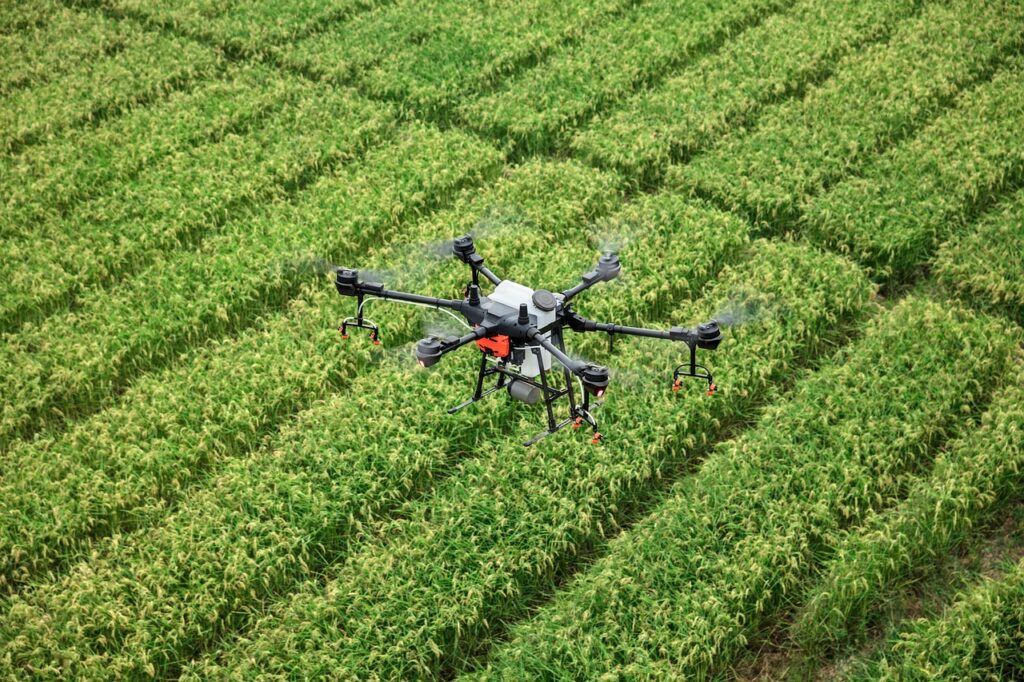
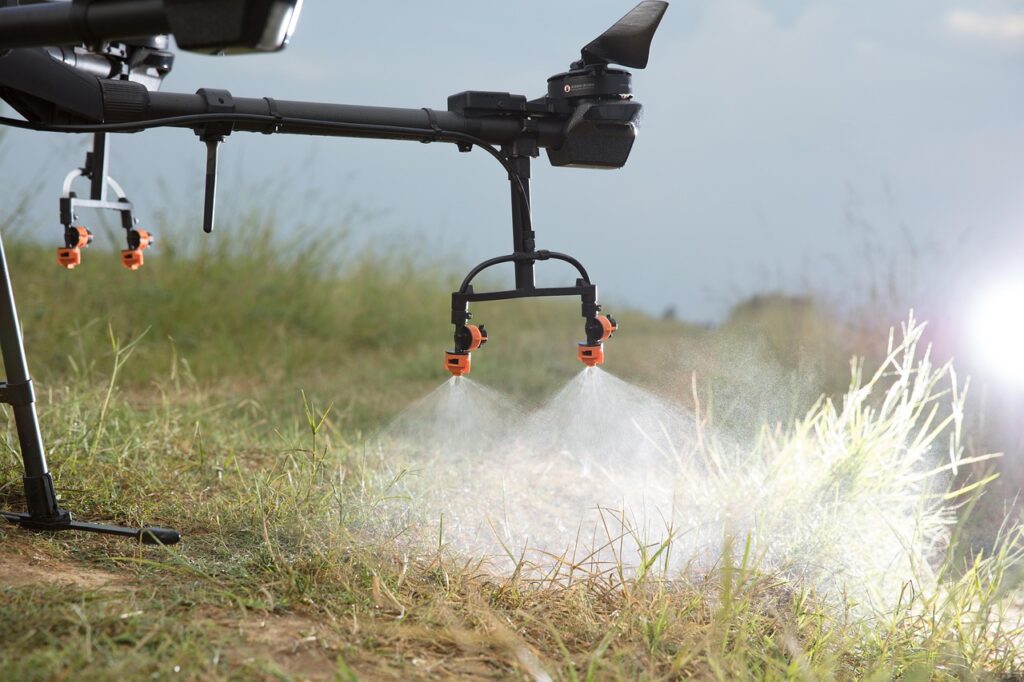
Application by spraying drones may administer pesticides, herbicides for and fertilizers with great accuracy, decreasing chemical waste and limiting exposure dangers for agricultural workers. They are particularly handy in rough terrains where tractor models or people may not reach readily

Crop Planting

Even though still a young function, certain aerial vehicles have the capacity of seed grafting, which may save energy and time during the first phases of farming

Benefits of Using Agricultural Drones

Increased Efficiency refers to Drones can scan and spray fields considerably quicker than human labor.

Cost Savings: Reduced demand for personnel and better use of the water and chemicals decreases expenses.

Better Yields: Instantaneous data helps make educated choices, eventually enhancing agricultural yield.

Green Farming: Targeted herbicide application and monitoring lessen environmental effect.

Labor dearth Solution: Automation helps with the dearth of competent agricultural labor in several locations.

Agricultural Drones Revolutionizing Modern Farming

Challenges and Limitations

High First Costs: The standard drones with complex sensors and software may be pricey.

The technique Skills Required: Farmers require training to operate aircraft and comprehend the data.

Legal Challenges: Many nations have strong restrictions controlling drone operation, particularly for for business. reasons.

The weather Dependency: Droids cannot be utilized properly during bad conditions, for instance heavy rain or high gusts.

The Future of Agricultural Drones

With breakthroughs in artificial cognitive ability, devices learning, and automated processes, the future years of agricultural drones seems bright. The use with other smart farming equipment, such as IoT indicators and robots, can make agricultural even other data-driven and sustainable. Governments and business enterprises have additionally invested in drone-based food production, recognizing its potential to promote nutritional stability and environmental conservation

Conclusion

Farming aircraft offer a major advance in farming technology, allowing smarter, more accurate, along with more sustainable agricultural methods. While problems exist, their advantages are too enormous to ignore. As more farmers embrace drone technology, it is expected to become a regular tool in contemporary food production, helping to feed a rising global population more effectively

Sukhoi Su-57 Russia’s Fifth-Generation Stealth Fighter

Sukhoi Su-57 Russia’s Fifth-Generation Stealth Fighter

1. Introduction to the Su-57

11. Introduction to the Su-57
22. Design and Stealth Capabilities
33. Avionics, Sensors, and Cockpit Systems
44. Engines and Performance
55. Production, Deployment, and Global Interest

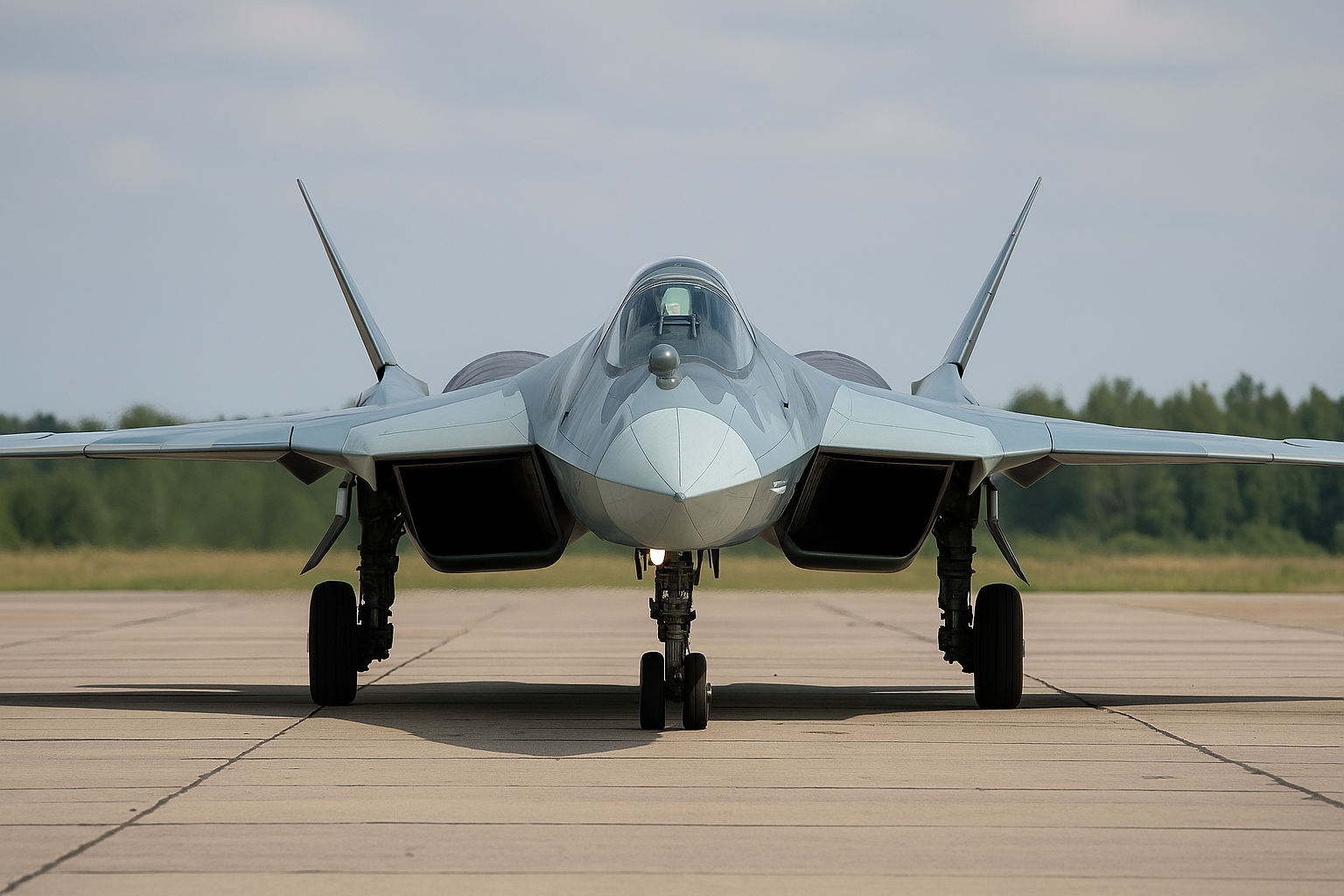
The Sukhoi Su-57 is the Russian first fifth-generation undercover multirole fighter, designed to compete with the likes of the U.S. F-22 Raptor along with F-35 Lightning II. Developed by Sukhoi, a part of Russia’s United Aircraft the Corporation, the Su-57 is intended to replace the outdated MiG-29 and Su-27 fighter planes in the Russian Aerospace Forces. Inside known as the T-50 under the PAK FA (Prospective Airborne a complex of Frontline Aviation) develop it, the aircraft first flew in 2010 and commenced restricted serial production in 2019.
Designed for supremacy in both air-to-air and air-to-ground tasks, the Su-57 combines stealth, agility, modern avionics, and long-range capabilities. Its development shows Russia’s determination to upgrade its air force and maintain strategic parity with NATO air power.

Sukhoi Su-57 Russia’s Fifth-Generation Stealth Fighter

2. Design and Stealth Capabilities

The Su-57 boasts a unique aerodynamic design designed for stealth and great mobility. Unlike typical fourth-generation Russian fighters, the Su-57 features a blended wing-body structure with forward-swept wings and all-moving horizontal stabilizers. The aircraft’s fuselage features radar-absorbent materials and internal weapons bays to lower radar cross-section (RCS), however its stealth profile is not considered as polished as Western rivals like the F-22.

The Su-57 utilizes advanced infrared signature-reducing technology and includes a relatively flat and angular shape to deflect radar signals Its composite airframe made of roughly 25% composite components also adds to its low observability While Russia portrays the Su-57 as a stealth vehicle several analysts feel it stresses agility and multi-mission capability over ultimate stealth optimization

3. Avionics, Sensors, and Cockpit Systems

One of the Su-57’s main characteristics is its modern avionics package, which encompasses cutting-edge radar, electronic warfare capabilities, and a complex cockpit. The plane is equipped with the the number N036 Byelka radar system, a powerful AESA (Active Electronically Scanned Array) radar designed by Tikhomirov NIIP. This radar has a large recognition range and is capable of tracking numerous aerial and ground objects simultaneously.

Additionally, the Su-57 has a Distributed Aperture technology (DAS) and infrared search and track (IRST) technology, boosting situational awareness and passive detection. The fighter’s cockpit has a glass cockpit interface with numerous multifunctional displays, a wide-angle head-up display (HUD), and perhaps a helmet-mounted display system for aiming and navigation.

Sukhoi Su-57 Russia’s Fifth-Generation Stealth Fighter

Artificial intelligence is also merged into the Su-57’s avionics, enabling for semi-autonomous tasks, improved target acquisition, and greater decision-making support for the pilot. This makes the Su-57 not simply a fighter, but a digital warfare platform.

4. Engines and Performance

The Su-57 is originally powered by the Saturn AL-41F1 turbofan engines, but future variants are intended to be upgraded with the more powerful and efficient Izdeliye 30 engines, which are currently under development. These next-generation engines offer higher thrust-to-weight ratio, fuel economy, and decreased infrared signature

With its present powerplant, the Su-57 offers supercruise capability—sustained supersonic flight without afterburners—and a maximum speed estimated at Mach 2. The aircraft also incorporates 3D thrust vectoring nozzles, providing it great agility in dogfights and high-angle maneuvers, a trademark of Russian fighter design philosophy.

The Su-57 has a thought fighting radius of 1,500 mile and a crossing range surpassing 3,500 kilometers. It can operate in high-threat areas, fire precision-guided missiles, and execute electronic warfare operations, making it a genuine multirole vehicle.

Sukhoi Su-57 Russia’s Fifth-Generation Stealth Fighter

5. Production, Deployment, and Global Interest

Despite its technological potential, the Su-57 program has suffered delays and obstacles, including engine development concerns, cost overruns, and restricted manufacturing numbers. As of mid-2025, just a limited number of Su-57s are in active service with the Russian Aerospace Forces. Full-scale manufacturing is projected to build up during the decade.

Russia has offered the Su-57 to overseas purchasers as a cost-effective alternative to Western fifth-generation fighters. India was once participated in a collaborative development version known as the FGFA (Fifth Generation Fighter Aircraft), however the program was subsequently terminated owing to concerns about cost and capability. However, countries including the United Arab Emirates, Algeria, and Turkey have showed various amounts of interest.

The Su-57 is also projected to play a part in Russia’s subsequent unmanned and artificial intelligence-driven air combat environment. It is being merged with the Okhotnik-B (“Hunter”) stealth drone, establishing a manned-unmanned teaming (MUM-T) capacity that might give tactical benefits on future battlefields.

Air Force One The Skybound Symbol of American Power

Air Force One The Skybound Symbol of American Power
1. A Flying Symbol of American Power
2. Inside the Flying White House
3. Missions with Precision and Meaning
4. Missions with Precision and Meaning

A Flying Symbol of American Power

Air Force One The Skybound Symbol of American Power

Air Force One is greater than simply an airplane It is a shifting piece of heritage and power It takes the President of the United States to locations near and far reflecting the strength and voice of a complete country When it arrives in the sky or lands at an airport people stop and pay notice because they know something significant is occurring

Most Americans assume one specific jet when they hear the moniker Air Force One although the word may technically refer to any Air Force plane that is transporting the President Still there currently are two specially improved Boeing 747s that are most recognized for this function They are developed not just for comfort but for protection strength and constant connectivity to the rest of the world

From the outdoors the airplane is bold and distinctive The huge the Americans flag the clean navy and white design and the patriotic phrases United States of America deliver a strong statement It is a soaring billboard promoting America’s leadership and the principles this nation stands for

Inside the Flying White House

Step into Air Force One and it seems like another universe Everything has an objective and a reason The President gets a separate apartment that contains a bedroom a toilet and even a small fitness area There is a health care office aboard also with a doctor on every trip just in case something unforeseen happens

There is also a chance for staff experts security employees and members of the press The airplane is practically a mini city in the sky with reaching rooms office areas and a full kitchen Everything is meant to assist the President stay focused engaged and willing to lead even while flying far above the ground

What makes this jet so remarkable is not just its luxury but how it keeps the President safe and in charge It can refuel while flying so it never has to land in a hurry It contains technologies that defend against electronic attacks and can escape radar if needed It is built to keep going no matter what the world throws at it

Missions with Precision and Meaning

A flight aboard Air Force One is never casual Every step is planned with care and precision Security is tight and the team is top notch The motorcade rolls straight up to the plane The President boards immediately and the engines scream to life under the supervision of highly trained pilots who know their mission important


Air Force One has a long and illustrious history Presidents have been flying since the 1940s and each generation of aircraft provides new powers and enhancements The current models entered service in the 1990s and preparations are already in motion for subsequent variants with even more technology and strength

Air Force One The Skybound Symbol of American Power


When the plane lands in another nation it is more than simply a vacation It is a statement The landing of Air Force One informs the globe that the United States is settling attention that it is participating and that it is willing to stand up for exactly what it believes in Crowds assemble to see it arrive and depart because it indicates history is in motion

Leading from the Sky

Air Force One is prepared for anything In times of danger or disaster it gets a flying direct center If ground networks are down or under danger the President may remain leading the US from the air making crucial decisions and staying in constant communication with leaders throughout the globe

Even with all its high tech equipment and military power the jet nevertheless conveys something extremely human It indicates that leadership does not cease It continues going across various time zones across borders in day and night Whatever from the cuisine to the seating is designed to keep the President and the staff sharp focused and ready

To travel on Air Force One is to carry the weight of the country It is not only about comfort or prestige It is about being prepared about making decisions that effect millions and doing it with care and devotion The aircraft is both strong and modest It gets the job done and does it well

At the end of the each day It Force One is not simply a plane It is a flying paragraph of America’s past and a reminder that power travels and that the responsibilities of the President never truly ends no matter where in the world this may be

F-22 Raptor RC Foam Jet A High-Speed Thrill in the Sky

F-22 Raptor RC Foam Jet A High-Speed Thrill in the Sky
SectionTitle
1Introduction to the F-22 Raptor RC Foam Jet
2Airborne Excitation F-22 Raptor EDF RC
3What Is an F-22 Raptor EDF Foam RC Jet?
4Crucial Elements
5EDF Foam Jet: Why Choose It?
6Lower Cost
7These are suitable for beginner and average pilots
8Conclusion

Airborne Excitation F-22 Raptor EDF RC Foam Jet For RC aviation enthusiasts, the F-22 Raptor is one of the most advanced stealth fighters to be found anywhere in the world, and to make a smaller-sized version of the aircraft is an interesting project. RC foam jets based on the F-22 Raptor, particularly electric ducted fan (EDF) powered models, have become quite popular. These jets offer amazing performance, detailed appearance, and nimble speed at prices affordable for modelers of all skill levels.F-22 Raptor RC Foam Jet A High-Speed Thrill in the Sky

F-22 Raptor RC Foam Jet A High-Speed Thrill in the Sky

What Is an F-22 Raptor EDF Foam RC Jet?

An electric ducted fan, or EDF F-22 Raptor RC Foam Jet A High-Speed Thrill in the Sky, foam RC jet is a type of radio-controlled aircraft that produces thrust with an electric ducted fan rather than a propeller. This type of propulsion is very well suited for the Raptor’s sleek design and stealthy appearance. Constructed from lightweight foams, such as Depron or EPO, these jets are inexpensive, durable, and easily repaired.F-22 Raptor RC Foam Jet A High-Speed Thrill in the Sky

Crucial Elements

EDF Power System: The diameter of the electric ducted fan, the most important part of the jet, can go from 50 mm to 90 mm, depending on model and purpose. This design is primarily responsible for the jet’s incredible speed and jet-like sound.

Stealth-Inspired Design Features: The RC F-22 sports twin vertical stabilizers to mimic the looks and aerodynamics of stealth, slanted wings, and a low fuselage.

Foam Construction: All but a few use high-density foam, which makes for lightweight, strong, and controllable aircraft. Modular components, which help for ease of transport and assembly, are included with some kits as well.

Control Surfaces: Most of these models are functional on elevators, rudders, and ailerons, depending on the level of complexity, and provide full 4-channel capability for aerobatic practices. F-22 Raptor EDF RC Foam Jet: A High-Speed Thrill in the Sky

EDF Foam Jet: Why Choose It?

F-22 Raptor RC Foam Jet A High-Speed Thrill in the Sky
FF-22 Raptor RC Foam Jet A High-Speed Thrill in the Sky

Lower Cost: Foam models are less expensive to manufacture than composite aircraft. F-22 Raptor EDF RC Foam Jet: A High-Speed Thrill in the Sky

F-22 Raptor EDF RC Foam Jet: A High-Speed Thrill in the Sky

These are suitable for beginner and average pilots

Smashability: “Foam cushions impact better than fiberglass or balsa because they are more absorbent of impacts. Repairability: Can be easily replaced or repaired using simple tools and foam-safe glue. Performance: These planes can reach excellent speeds and perform very well when they are designed for

the right EDF and built light. The Flying F-22 EDF foam jet is an exhilarating combination of agility and speed. The jet is proficient in high-speed passes, rolls, loops, and vertical climbs. Combining a 4S or 6S LiPo battery with a good ESC and powerful motor, the feeling from the pilots when flying is usually how nice and responsive the flying feels.

Conclusion

The F-22 Raptor the RC Foam Jet is a lot of fun and really lets hobbyists and fans experience the excitement of flying at high speeds. With its sleek form, lightweight foam building, and powerful engine, this RC jet mimics the feel of the genuine F-22 while being accessible to pilots of various skill levels. The F-22 is quite stable and responsive, whether you’re flying at peak speed or doing precise aerobatic spins.
One of the best things about it is how simple it is to launch, fly, and keep up with. The foam body strikes a fantastic mix between durability and performance, making it perfect for both novices who are just starting out and expert users who want to go fast. While flying time might be restricted by battery capacity, this is a modest trade-off for the thrilling, action-packed excitement the jet gives.
The F-22 Raptor RC Foam Jet is a great addition to any RC collection as a whole. In its class, it has the best mix of speed, agility, and ease of use. This model is one of the best options for anyone who want to experience the thrill of jet-powered RC flight without spending a lot of money. It’s a real high-speed thrill in the skies.

The SR 71 Blackbird RC model is a stunning

The SR 71 Blackbird RC model is a stunning

The SR 71 Blackbird RC model is a wonderful tribute to one of the most renowned aircraft in aviation history Designed to mimic the renowned reconnaissance aircraft produced by Lockheed Martin this RC model captures the sleek lines sharp edges and futuristic look of the original SR 71 that once commanded the skies at astounding speeds and altitudes The fullscale SR 71 Blackbird was a wonder of engineering capable of flying at speeds above Mach 3 and altitudes beyond 85000 feet which made it almost hard to intercept throughout its service years

The SR 71 Blackbird RC model is a stunning

The RC version

of the SR 71 Blackbird appeals to hobbyists engineers and aviation lovers who respect the power and design of high-speed aircraft. Built utilizing lightweight materials such as foam carbon fiber and reinforced plastic the aircraft attempts to find a balance between durability and flying performance The SR 71 RC model comes in numerous sizes but the most typical ones vary from 1000mm to 2000mm wingspan with some bespoke models even exceeding these proportions to achieve more realism in look and flight dynamics

Many RC manufacturer

have created variants of the SR 71 Blackbird model Some are electric ducted fan EDF driven while others have dual turbine engines for a more authentic feel The EDF variants are often more approachable and userfriendly making them suited for intermediate pilots whereas the turbine versions need a greater degree of ability owing to their complexity and speed The dual engine configuration delivers the unmistakable dual exhaust appearance that identifies the true Blackbird

The SR 71 Blackbird RC model is a stunning

One of the biggest problems

in developing and flying an RC SR 71 model is duplicating its highspeed flight characteristics in a scaleddown form The original aircraft was constructed for speed and stability at high altitudes which implies that obtaining stable low altitude flight at RC size required precision engineering This is commonly handled through the employment of flight stabilization equipment like as gyroscopes and sophisticated transmitters which aid in maintaining control during tight maneuvers and highspeed passes

The SR 71 Blackbird RC model is a stunning

The visual appeal

of the SR 71 RC model is unparalleled Its matte black finish angular shape and characteristic chines around the fuselage make it readily recognized The landing gear either retractable or permanent depending on the aircraft provides another degree of realism Some premium models additionally have functioning cockpit elements LED lighting and scale markings which increase authenticity and visual delight during both static exhibition and active flying

Performancewise

the SR 71 RC model may attain outstanding speeds especially when coupled with twin 70mm or 90mm EDF units or jet turbines Some highend versions may fly at speeds surpassing 150 kilometers per hour providing a realistic noise and motion blur that simulates the fullscale aircraft Although it is not built for aerobatic flying its stability at high speed and fluid turning capability make it suitable for straightline speed passes and lengthy smooth bends exactly like its realworld counterpart

Another noteworthy

part of the SR 71 Blackbird RC model is the community that surrounds it Online forums YouTube channels and RC aircraft clubs commonly include builds modifications and flying demonstrations of this model Builders regularly exchange advice on improving flying stability boosting speed and updating electronics like as ESCs motors and batteries This collaborative atmosphere helps enhance the overall quality and performance of the model as it travels through many hands and brains enthusiastic about flying

For novices the SR 71

Blackbird as a RC simulation may not be the greatest starting point owing to its distinctive flying profile and dual engine arrangement However for expert RC pilots it is a rewarding challenge and a badge in honor Once developed the model delivers stunning flight feels and commands focus at any flying field It represents as a symbol of inventive performance and historical relevance

Many pilots

opt to modify their SR 71 RC models with unique tail numbers mission insignias or even imitate the titanium shine that was a characteristic of the actual aircraft when viewed under sunlight These customized additions add character and reflect the passion of the builder to mimic the tiniest elements of this renowned aircraft

In terms of maintenance

the SR 71 RC model requires regular examination owing to the highspeed nature of its flight which can put stress on the airframe and electronics Checking motor mounts servo linkages and landing gear after each flight is advised to guarantee lifespan Some builders additionally utilize telemetry devices to monitor battery voltage motor temperature and general system health during flight enabling for safer and more informed flying

The SR 71 Blackbird RC mode

is more than simply a remote controlled airplane It is a flying monument to one of the greatest aviation exploits of the 20th century It embodies the spirit of stealth speed and accuracy that distinguished the Cold War era and puts it to the fingertips of current enthusiasts Whether on a runway or a display shelf the SR 71 RC model elicits amazement and adoration from anybody who sees it

In conclusion

the SR 71 Blackbird RC model is a perfect blend of engineering artistry and passion It challenges pilots to push their skills and rewards them with an unmatched flying experience From its twin engine roar to its majestic silhouette in the sky it captures the imagination and showcases what is possible when innovation meets dedication in the world of RC aviation

DLE 200 vs DLE 400 Gasoline Plane Engine

DLE 200 vs DLE 400 Gasoline Plane Engine

When it comes to efficient RC airplanes, the engine is at the core of everything. Among the leading alternatives for large-scale RC planes, the DLE 200 and DLE 400 gasoline engines stand out as strong and reliable solutions for amateurs who expect significant performance in the sky. Both engines are built for big models and deliver plenty of muscle, but they cater to various demands based on plane size, flying style, and engine arrangement. In this post, we evaluate the DLE 200 and DLE a total of 400 engines in terms of design, power, efficiency, and best-use scenarios.

Engine Configuration and Design

The DLE 200 is a strong twin-cylinder gasoline engine. It is engineered for performance, giving substantial power in a small and relatively lightweight design. Twin-cylinder configurations offer superb balance and less vibration compared to single-cylinder motors, making them a popular for giant-scale planes
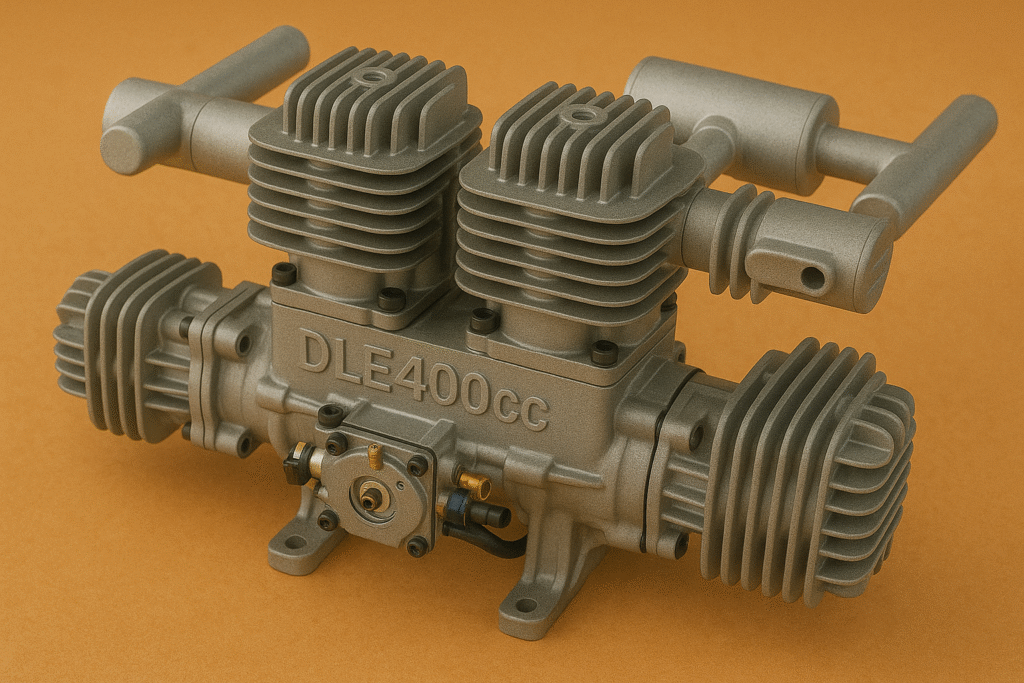
On the other side, the DLE 400 is a four-cylinder, horizontally opposed (boxer) engine, which is one of the largest and most durable engines in the DLE family. It’s developed exclusively for ultra-large models and professional scale fliers that demand tremendous power with smooth operation. The four-cylinder layout means it runs incredibly smooth with very little vibration, delivering outstanding throttle response and tremendous torque DLE 200 vs DLE 400 Gasoline Plane Engine

DLE 200 vs DLE 400 Gasoline Plane Engine

Power Output and Performance

The DLE 200 normally provides roughly 20 horsepower, making it well-suited for large-size aerobatic planes, scale warbirds, and gigantic gliders. Its performance is more than enough for 100–120cc class models and gives outstanding climbing power, quick handling, and strong throttle range.

The DLE 400, being a monstrous four-cylinder engine, generates roughly 40 horsepower—double that of the DLE 200. This engine is built for genuine giants in the RC sky, typically used in 35%–50% scale aircraft, massive multi-wing planes, and high-speed aerobatics when insane levels of push are necessary. The DLE 400 allows pilots the opportunity to undertake extreme 3D maneuvers or fly massive warbirds with scale realism and confidence

Weight and Size

The DLE 200 is lighter than the DLE 400, typically weighing around 3.6 kg (7.9 lbs). Its compact form factor means it can be mounted easily in various fuselage types without extensive modification, making it popular among intermediate to advanced flyers.

In contrast, the DLE 400 is heavier, weighing approximately 6.8 kg (15 lbs). This added weight means it’s better suited to large models with enough space and structural strength to support it. While it offers exceptional performance, it also requires a well-planned build and reinforced airframe to handle the size and power of the engine.

DLE 200 vs DLE 400 Gasoline Plane Engine

Fuel Efficiency and Maintenance

Both engines are gasoline-powered meaning they offer superior fuel economy than nitro engines, especially during longer flights. The DLE 200 being a twin is easier to tune and maintain compared to the more complicated four-cylinder DLE 400. For many pilots, the DLE 200 achieves the sweet spot between performance and simplicity of ownership
The DLE 400 while more powerful and smoother, demands more care in terms of maintenance and tune owing to its higher cylinder count and complexity However, for experienced builders and pilots the trade-off is well worth it for the pure pleasure and capabilities this engine gives

Final Thoughts

Choosing between the DLE 200 and the DLE 400 boils down to the size of your RC airplane, your flying ambitions, and your experience level If you desire excellent power, dependability and easy maintenance the DLE 200 is a solid competitor that fits a broad variety of big aircraft If you re creating or flying a genuinely big model and require tremendous power with seamless delivery the DLE 400 stands unsurpassed in its class Both are fantastic engines and whatever you select DLEs engineering and reliability will keep you flying strong

How Telemintory GPS Systems Work 2025

How Telemintory GPS Systems Work 2025

1.noThe GPS receiver
2.noA telematics device that is installed
3.noIn addition to GPS and interactions modules Telemintory
4.noAnother significant
5.noNormal a calibration
6.noIn conclusion

Telemintory

GPS systems are a new technology that uses satellites and telematics to keep track of and manage cars or assets across large distances. Using the Global Positioning System (GPS), these devices can find the exact location of an object at any moment. Because they provide real-time data and control functions that are necessary for smooth

How Telemintory GPS Systems Work 2025

operations, they are frequently utilized in logistics, transportation, agriculture, construction, and personal tracking.

The GPS receiver

is the most important part of a Telemintory GPS system. This gadget talks to many satellites that are circling the Earth. These satellites provide signals to the receiver, which takes data from at least four satellites to figure out its precise location by triangulating the signals. Depending on the quality of the receiver and the intensity of the satellite signal, this position data can be accurate to within a few meters or a few millimeters.

A telematics device that is installed

in a car or piece of equipment often includes a GPS receiver in it. This device is also connected with a cellular or satellite modem allowing it to broadcast the location and other sensor data to a central server or cloud platform When coverage is weak in distant places, this data is supplied over wireless networks like 4G LTE or satellite links.

How Telemintory GPS Systems Work 2025

Once the data reaches the server it is analyzed and made accessible through software dashboards or portable apps Users can view real time location history movement speed engine status fuel consumption the temperature and other telematics data based on what sensors are integrated towards the system This visibility is crucial for fleet managers who want to optimize routing reduce idle time ensure driver safety as well as boost overall efficiency

In addition to GPS and interactions modules Telemintory

systems sometimes feature acceleration sensors gyroscopes and other passenger sensors These sensors capture information on driving behavior such as forceful braking sharp bends quick acceleration or crashes This data assists in risk assessments insurance reviews and driver training programs
Geo fence is another significant function of Telemintory GPS devices It allows directors to establish virtual borders on a technological map Anytime a vehicle enters or departs a defined region the system sends automated notifications to the operator This is especially important for monitoring limited zones unlawful usage and promoting that users follow specified routes

How Telemintory GPS Systems Work 2025

The data acquired by Telemintory GPS devices is saved and processed to provide reports These reports give insights into fleet performance asset utilization maintenance plans and compliance status Predictive the upkeep has analyze engine data to identify probable faults helping organizations avoid costly downtime and repairs
Security is a significant advantage of utilizing Telemintory GPS systems In case of theft the real time tracking technology helps find stolen vehicles or goods swiftly Moreover the technology may remotely deactivate a vehicle or activate alarms if illicit movement is detected Some systems also incorporate panic buttons enabling drivers to call rescue in crises

Another significant

component is the connection of Telemintory applications with other software tools Fleet management ERP and dispatch systems can link easily with GPS data enabling for automated operations real time updates and improved coordination For example when a delivery is delivered the GPS system can validate the position and period inevitably updating the customer and backend system without user input


The installation method for Telemintory devices is quite basic Depending on the model gadgets can be connected to the car electrical system or placed magnetically with the battery power for portability The setup comprises putting the GPS antenna placing the telematics box setting sensors and combining the system to the software framework

Normal a calibration

and upgrades are had to keep the method running properly Firmware upgrades enhance device performance security fixes keep info safe and the calibration guarantees reliable readings from gauges and GPS sections Maintenance crews normally conduct these upgrades during periodic vehicle reviews or far away over the air


As electronic devices continues to advance Telemintory GPS devices are growing more knowledgeable and more flexible Integration with AI provides predictive analytics path optimization and deviation detection These sophisticated features enable firms make choices based on data and stay on par in quickly changing marketplaces

In conclusion

Telemintory satellite navigation systems are significant instruments in modern industry They give precise location tracking real time track actionable perspectives and security aspects By integrating GPS satellite gadgets with modern telematics instruments and facts analytics these systems give end to end visibility and charge over mobile assets Their usefulness spans from up and running performance and cost saving money to safety complying and customer satisfaction